CS Lewis Books in Order
Browse all C. S. Lewis books in order, with summaries, Narnia and Cosmic Trilogy reading guides, series background, and simple suggestions on where to start.
Last updated: December 17, 2025
As an Amazon Associate, we earn from qualifying purchases (at no extra cost to you).
Publication Order
42 books
%20-%20A%20Miscellany%20of%20Advice%20and%20Opinions.jpg)
On Writing (and Writers)
2022
This recent compilation assembles Lewis’s comments on the craft of writing and the joy of reading. Drawing from letters, essays, and lectures, it offers frank advice on style, imagination, audience, and criticism, useful both to working writers and to readers curious about how he thought on the page.
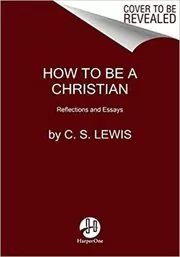
How to Be a Christian
2018
Gathering essays and excerpts from across his career, this book highlights Lewis’s practical counsel on living the Christian life. Topics include forgiveness, prayer, church life, and moral decision-making, making it a concise guide for readers who want applied wisdom rather than abstract theology.
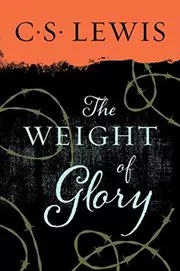
The Weight of Glory
2016
This collection of addresses includes Lewis’s famous sermon The Weight of Glory along with talks on learning, pacifism, forgiveness, and Christian community. The pieces blend vivid images with careful argument, asking what it means to pursue holiness and glory in ordinary life.
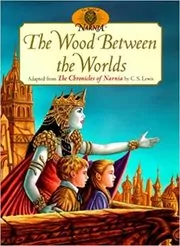
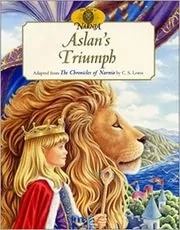
Spellbound
1995
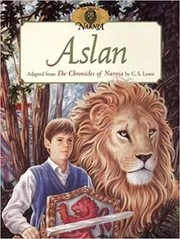
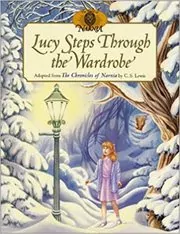
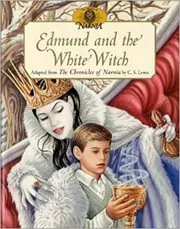
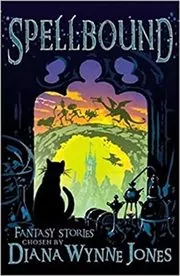
Edited by Diana Wynne Jones, Spellbound gathers fantasy stories and excerpts from a range of authors, classic and contemporary. It’s designed as a sampler for younger readers, introducing them to witches, dragons, and otherworldly adventures—including a taste of C. S. Lewis’s Narnian world.
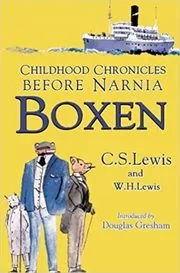
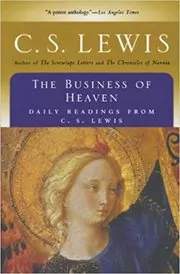
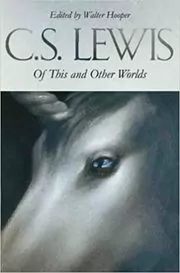
Of This and Other Worlds
1982
Collected and edited after his death, these essays show Lewis thinking aloud about stories, fairy tales, science fiction, and the craft of reading. He defends imaginative literature and explains why invented worlds can illuminate real human motives and spiritual questions.
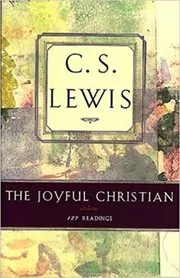
Christian Reflections
1967
An essay collection spanning much of Lewis’s career, this volume touches on topics like culture, ethics, theology, and literature. The pieces are thoughtful but accessible, showing how he linked Christian belief to questions about history, education, and everyday intellectual life.
Screwtape Proposes A Toast
1965
A follow-up to The Screwtape Letters, this long satirical essay imagines Screwtape addressing a graduation banquet in hell. His speech skewers modern education, mass culture, and the desire for safety and mediocrity, using irony to probe how societies can be quietly corrupted.
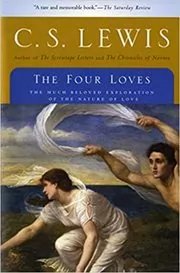
The Four Loves
1960
Here Lewis explores four kinds of human love—affection, friendship, eros, and charity—showing both their beauty and their dangers. He writes in a conversational style, mixing examples from ordinary life with theological insight about how love can either turn inward or be opened up to God.
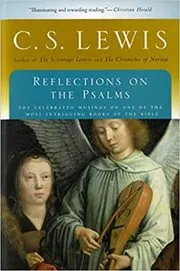
Reflections on the Psalms
1958
Rather than a line-by-line commentary, this book offers Lewis’s personal, often surprising thoughts on themes in the Psalms—praise, judgment, cursing, death, and more. He admits his own puzzles and shows how these ancient songs can still shape modern prayer and honest emotion.
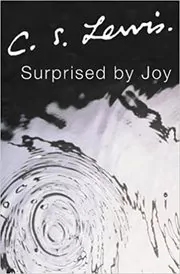
Surprised by Joy
1955
Lewis looks back on his childhood in Belfast, schooldays, war service, and early academic life to trace how a recurring sense of longing—what he calls joy—eventually led him from atheism to Christian faith. The memoir is candid, reflective, and more about a journey than its destination.
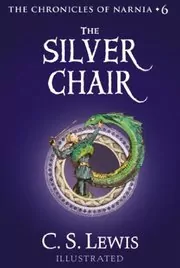
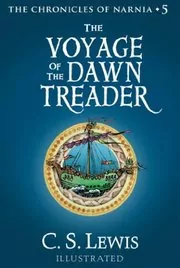
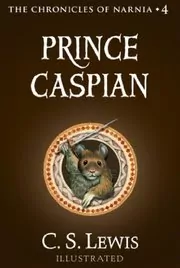
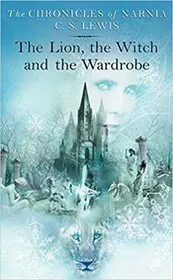
The Lion, the Witch, and the Wardrobe
1950
Four siblings evacuated from wartime London discover a wardrobe that opens into Narnia, a land frozen in endless winter by the White Witch. There they meet Aslan the lion, face betrayal and courage, and are drawn into a battle to free the country.
Recommended by:
George MacDonald
1946
Lewis gathers short selections from the Scottish writer George MacDonald, whose fiction profoundly shaped his own imagination. Arranged as brief daily readings, the anthology introduces MacDonald’s themes of relentless divine love, spiritual growth, and the hard mercy that calls people to holiness.
Mere Christianity
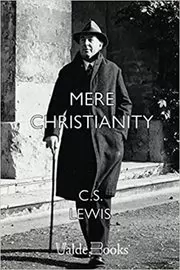
1943
Based on Lewis’s wartime BBC talks, this book lays out a plainspoken case for historic Christian belief. He moves from moral law and the existence of God to Christian doctrine and ethics, inviting readers to examine faith with both reason and imagination.
Recommended by:
The Screwtape Letters
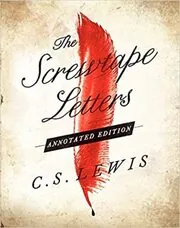
1942
An experienced tempter, Screwtape, advises his nephew Wormwood on how to sabotage the faith of an ordinary Englishman. Through their darkly funny letters, Lewis exposes everyday spiritual struggles and the subtle ways self-centeredness, boredom, and fear can erode belief.
Recommended by:
Out of the Silent Planet
1938
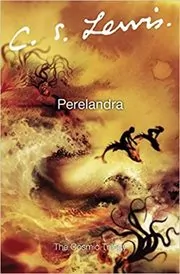
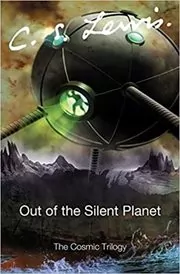
Cambridge scholar Elwin Ransom is kidnapped and taken to Mars, where he escapes his captors and slowly learns the language and ways of the planet’s unfallen inhabitants. His experiences reveal a larger spiritual cosmos and raise hard questions about humanity’s motives and destiny.
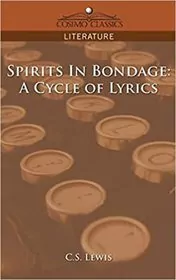
Spirits in Bondage
1919
Lewis’s first published book, this early poetry collection was written shortly after World War I and before his conversion to Christianity. The poems wrestle with beauty, suffering, and a universe that can feel hostile, offering a stark contrast to his later, more hopeful work.
Where should I start?
If you're new to Narnia: The Lion, the Witch, and the Wardrobe → Prince Caspian → The Voyage of the Dawn Treader.
If you want his core Christian apologetics: Mere Christianity → The Screwtape Letters → The Great Divorce → The Problem of Pain.
If you enjoy thoughtful science fiction: Out of the Silent Planet → Perelandra → That Hideous Strength.
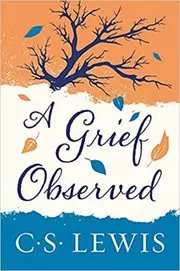
If you're curious about Lewis himself: Surprised by Joy → A Grief Observed.
If you prefer short daily readings: The Joyful Christian → The Business of Heaven → How to Be a Christian.
Author bio
C. S. Lewis was born Clive Staples Lewis in Belfast, Northern Ireland, on November 29, 1898, and grew up in a house packed with books and stories. From an early age he and his older brother Warren invented an animal-filled imaginary world called Boxen, sketching maps and histories long before he ever dreamed of Narnia.
His mother, Flora, had a university degree in mathematics, and his father, Albert, worked as a solicitor; both encouraged reading, but his childhood was shaken by his mother’s death when he was nine. After a string of often unhappy experiences at English boarding schools, Lewis was privately tutored and eventually won a scholarship to University College, Oxford.
World War I interrupted his studies. Lewis served with the Somerset Light Infantry on the Western Front, was wounded in France in 1918, and returned to Oxford deeply marked by the trenches but determined to finish his education. He went on to earn a rare triple first in classics and English, then became a fellow and tutor in English literature at Magdalen College, Oxford, a post he held for nearly three decades.
Through his teens and twenties Lewis called himself an atheist, yet he kept being drawn back to questions of meaning, beauty, and longing.
The pull toward faith came partly through books—especially the fantasy of George MacDonald and G. K. Chesterton—and partly through friends. At Oxford he fell in with a circle of writers who became the Inklings, including J. R. R. Tolkien and others who loved myth, language, and story. After years of resistance, Lewis accepted belief in God around 1930 and became a Christian in 1931, a journey he later described in his spiritual autobiography Surprised by Joy.
Alongside his scholarly work on medieval and Renaissance literature, Lewis began to write for a broader audience. In the late 1930s and early 1940s he published Out of the Silent Planet, the first volume of what became the Cosmic Trilogy, and The Screwtape Letters, a satirical set of letters from a senior devil to his apprentice. During World War II he delivered a series of BBC radio talks explaining the basics of Christian belief; these were later shaped into Mere Christianity, still one of his most widely read books.
In the early 1950s Lewis turned a private set of images—a faun with an umbrella, a lamppost in a snowy wood—into The Chronicles of Narnia, seven short novels in which children from our world stumble into a country of talking animals, ancient prophecies, and the great lion Aslan. The books weave together fairy-tale adventure, wartime realism, and Christian imagination in a way that has reached generations of readers.
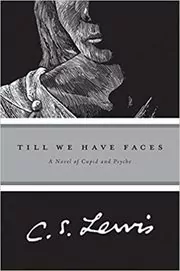
Not all of his fiction is for children. The Cosmic Trilogy sends the scholar Ransom to Mars, Venus, and a very troubled English college town, while novels like Till We Have Faces and The Great Divorce use myth and fantasy to explore questions of pride, desire, and the shape of the afterlife. His nonfiction ranges from the problem of suffering in The Problem of Pain to the nature of love in The Four Loves and his own struggles with bereavement in A Grief Observed.
Lewis’s personal life took a surprising turn when he married the American writer Joy Davidman in the 1950s. Their brief, intense marriage and her death from cancer in 1960 left a deep imprint on him and led directly to the raw, notebook-like reflections of A Grief Observed, in which he wrestles openly with God in the midst of loss.
He died in Oxford on November 22, 1963, but his mix of clear reasoning, imaginative storytelling, and down-to-earth prose keeps drawing new readers into conversations he started decades ago.
Edited by
Software engineer whose passion for tracking book recommendations from podcasts inspired the creation of MRB.
Lead investor at 3one4 Capital whose startup expertise and love for books helped shaped MRB and its growth.
Comments
Did we miss something? Have feedback?
Help us improve this page by sharing your thoughts


沒有留言:
張貼留言